
What Is Covenant Creation
There are two basic ways to read the Genesis creation story
Below we will briefly explain the two options and then explore the one we feel is correct.
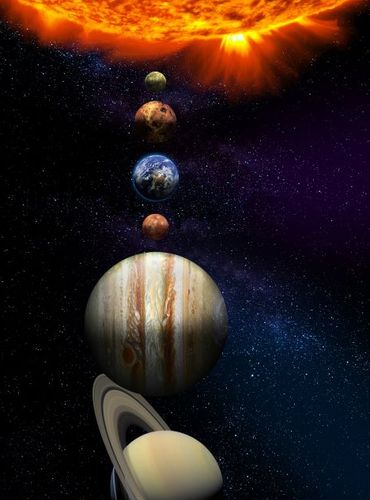
A Material view
A Material view is an approach that looks to reconcile biblical texts with a modern scientific understanding. It sees Genesis as being about the creation of the physical planets.

Non Material
Covenant Creation, which doesn’t see Genesis as the creation of the planet, but as a prophetic poem about the creation of a people: God’s Old Covenant relationship with Israel. It’s a story about the beginning of a people group. Like a mother with a new baby
Young and Old Earth View
So, going back to that material view, the two main material views that you’re probably familiar with are Young Earth Creationism, which views Genesis as a story of the creation of the earth about six to eight thousand years ago, and Old Earth Creationism, which views Genesis as the story of the creation of the earth millions and billions of years ago. They both have material creation in view.
Relationship Creation
The Bible we believe is not talking about material creation, but rather It’s about forming and filling a people with purpose by calling them into a relationship. The point of the story is the national history of God’s old covenant world, a relationship with ancient Israel.
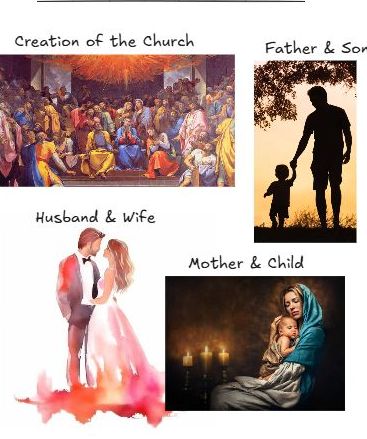
We as humans already understand the forming of a relationship with other people, for example a Husband & Wife. Parent & Child. A group of Church members. God is doing the same thing in the beginning forming a relationship with humankind

Why not Material
Revelation 6:12–13 says this
“When he opened the sixth seal, I looked, and behold, there was a great earthquake, and the sun became black as sackcloth, the full moon became like blood, 13 and the stars of the sky fell to the earth as the fig tree sheds its winter fruit when shaken by a gale.”
If any star fell to earth, the entire planet and all other planets would be destroyed. That is not Gods plan.
The Beginning in Genesis
Genesis 1:1 In the beginning, God created the heavens and the earth.
Genesis 1:16 And God made the two great lights—the greater light to rule the day and the lesser light to rule the night—and the stars.
This is why we have to be consistent, If the end in Revelation is symbolic, why would Genesis the beginning be literal.
Original audience relevance
So, Covenant Creation first asks: How did the original ancient Israelite’s understand their own creation story?
The statement “in the beginning God created” requires that we ask the question of original audience relevance, because it would make sense that God would use the language and understanding of his people at that time to communicate to them where they were at and where they were going. We do not have a single example in Scripture of God giving information beyond the scientific understanding of the time; He meets people where they’re at.
Ancient Near Eastern cultures did not describe creation as the making of physical matter. Instead, they understood creation in terms of bringing order, assigning functions, and establishing identity and purpose for people. To understand the Bible correctly today, we must step into the world of its original audience, because the text was written for them, not for us first.
If creation stories in the ancient Near East were not about material origins, it is worth asking whether the biblical creation account was intended that way either. Our modern interpretation may have been just as unfamiliar to them as the idea of “relationship creation” is to many Christians today.
Because of this, the way we think and talk about the creation account in Genesis needs to be reexamined—both in light of its cultural context and the text itself. Some people hesitate to move away from a strictly material, literal view, often out of fear. Unfortunately, they are sometimes told that any alternative reading turns Genesis into mere mythology, which is a misunderstanding.
A Covenant Creation view understands Genesis as true, but as describing the creation of a covenantal world rather than the physical formation of the planet. The text itself supports this understanding. For example, the Hebrew word used to describe what God did “in the beginning” is bara. We usually translate bara as “create,” but then we often read our modern assumptions into that word. Today, we tend to think of creation as the material act of bringing something into existence out of nothing.
In the ancient Near Eastern world, however, creation was understood differently. To bara something meant to bring it into an ordered state of existence—to assign it function, purpose, and meaning. A creative act was not primarily about making material objects, but about establishing order and identity.
This idea is also reflected in other ancient Near Eastern creation stories, which, like Genesis, often begin with land emerging from primeval waters. These waters symbolize non-existence or chaos—places without order, function, or purpose—rather than a material substance waiting to be shaped.